Picking And Using Fresh Flowers
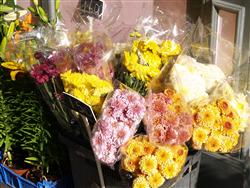 Just about everyone loves the appearance of fresh flowers, or the smell of sweetly fragrant ones. Most people love to bring flowers into their homes to brighten them up, particularly if they don’t have a garden to enjoy. Many will buy their flowers from a florist, supermarket or road side stall. If you are lucky enough, however, to have access to fresh flowers from your garden, or perhaps from a friend or neighbour, then it can be very enjoyable to pick and use your own flowers.
Different species of flowers need to be picked differently, and treated differently after picking. Some flowers can be picked well before the buds open - the buds then open later on. For other species, the flower must be at least partially opened. In some cases, flowers won’t open if they are picked too early.
General Guidelines for Picking Flowers
- Pick them as early as possible in the day, particularly on hot days.
- Check the flowers before picking to see if they have any pests or disease problems that might infect your indoor plants, or might be a nuisance or danger to you, such as spiders, ants, aphids, thrips, etc. If the flowers are diseased, avoid them, spray the flowers or shake them gently to dislodge any pests (this can help remove pests, but will not help with diseases).
- Use sharp cutting tools when cutting flowers. Dip the tools in disinfectant before cutting the flowers. This ensures as little damage as possible is done to the plant you are cutting flowers from, and minimises the spread of diseases.
- Take the cut flowers inside as soon as possible to prevent them drying out.
- Flowers cut in warm conditions will have a lot of heat in the plant tissue, and unless cooled quickly, that heat will continue to hasten deterioration. It is therefore essential to get the temperature of most flowers down to 10-15 degrees Celsius as soon as possible after harvest. The best way to do this is to stand the picked stems in deep, cold water, or place them in a fridge temporarily (2-5 degrees C). Prolonged storage in a fridge should be avoided as this can inhibit flower opening on some types of flower.
Storing Flowers
Flower species vary markedly in how long they can be stored for. Some orchid flowers can remain open for two months, but most flowers do not last so well. Flower quality deteriorates from harvest onwards. Good storage slows deterioration, but does not stop it.
Vase Life
Vase life refers to how long the flower will last when placed on display in a vase or similar container. Vase life is influenced by a number of factors including:
- How and when the flowers were harvested. Harvesting and storing the flowers under optimum conditions (see above) will greatly extend vase life.
- How hot the area is in which the flowers are displayed – too hot and the flowers will dry out very quickly. Too cold and some flowers may not fully open.
- Humidity levels – the more humid the conditions in your home the less likely the flower will be to dry out. Too humid however and the flowers may brown off from fungal diseases (not as common). Hot, dry air from heaters will rapidly dry out flowers. Placement of vases/containers to avoid the worst of this will help extend flower life.
- Using “extenders” to prolong the flowers life. These can usually be obtained from florists or some nurseries. They are often provided by florists as part of the service when you buy flowers from them. They are usually small sachets containing mixtures of sugars and other chemicals that help feed the flower (taken up with water through the cut base) and keep the water in the vase/container clean.
- An alternative to placing flower stems in water is to insert them into florists “sponge” or “block”. This is a rigid, foam-like material that holds high levels of moisture when soaked. This can usually be obtained directly from florists or from florist suppliers. You might also recycle some from floral arrangements you obtain from florists or have been given.
Requirements of Specific Species
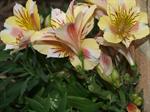
Alstroemeria - Pick when there are 4-5 flowers open on a stem, and store wet at 4 degrees Celsius until ready for use. Use a preservative solution in the water.
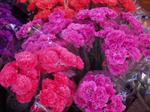
Carnation - Pick when the outer petals are almost fully opened. Cool by putting straight into cold water, then placing in cool storage at 2-4 degrees Celsius, until ready for use. Stand in a solution of sugar and bacteriacide.
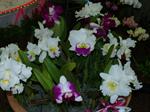
Cattleya Orchids - Pick 2 to 4 days after the flower bud opens. They can be stored in water at 8-10 degrees Celsius (never below 8) for up to two weeks.
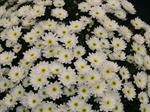
Chrysanthemum - Most are picked when some flowers are fully open, though some varieties can be picked a little earlier.
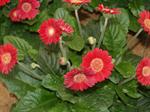
Gerbera - Pick when the outer row of flowers begins to show pollen. Store dry at 2 degrees Celsius in wax boxes for up to 2 days.
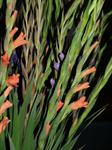
Gladioli - Pick when the first flower is almost open. The flowers can be stored at 4 degrees Celsius for up to 7 days in a moisture retaining material. They can be stored for longer periods at similar temperatures if standing in water, provided they are treated prior to cooling (treat for 24hrs in a solution of sugar and bacteriacide).
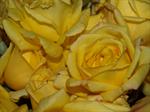
Roses - Pick sometime between when colour appears in the bud, to when the first one or two petals are starting to burst open. If being stored, cut a day earlier and place immediately in a preservative solution, then put them into cold storage at 1 degree Celsius until you are ready to use them (you can store for 1 to 7 days).
More from ACS
Ebook - Over 60,000 copies sold: a classic reference.
View eBook
Ebook - Colourful informative book: covers all aspects of growing and using these lovely plants.
View eBook
Ebook - A must read for the enthusiast and amateur: 124 pages of bursting colour, covers care as well as identification.
View eBook
Ebook - Identify, select, grow, care, propagate, landscape,
dictionary of perennials.
View eBook
Course - for the professional grower or hobbyist.
View Course
Ebook - colourful guide for the enthusiast or commercial grower alike.
View eBook
Ebook - perennial favourite! Beautiful coloured photos; covers classification, care: pruning, soils, pests and diseases etc.
View eBook
Ebook - Know what you can grow where and how with this accessible text.
View eBook
Ebook - a great informative text to extend your knowledge and get it right the first time!
View eBook
Course - for: Nurserymen, Garden Centre Staff, Gardeners, Landscapers, Cut Flower Farmers
Seed Producers, Merchants, Breeders, Hobbyists.
View Course
Course - Develop a well rounded understanding of what affects the success of cutting propagation, and how to improve your results.
View Course
Very comprehensive - great starting point to your career in horticulture.
View Course
Course - Learn cottage garden design using heritage plants (or modern, drought tolerant plants plus features eg. formal to semi-formal; designs, arches, arbours, statues, gazebos, picket fencing, etc.
View Course