On The Nose: Using Fragrance In The Garden
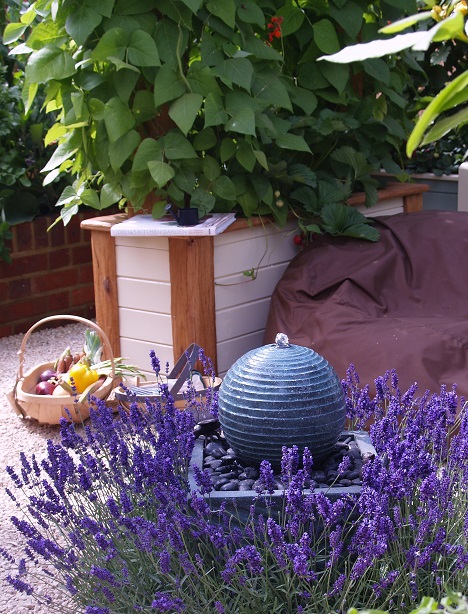 There is nothing quite like wandering through your garden on a warm evening and enjoying the sweet scent of gardenias or jasmine in bloom. The fragrance of a garden can really enhance its appeal, and encourage people to spend time “smelling the roses”. Fragrance actually becomes more intense in warmer weather.
Beware of Allergies
Some fragrant plants such as jasmine and honeysuckle can cause problems for allergy sufferers. Think ahead before you plant these species…..
The source of the scent
Garden fragrances come mainly from flowers or foliage. Many fragrant plants, such as several of the Rutaceae family have scented flowers and foliage, so are particularly good. Where a plant has fragrant foliage, the scent is available all year round. However, plants with scented foliage may need to be bruised or brushed to release their smell.
When fragrant foliage is stood upon, crushed, or in many cases just lightly brushed, aromatic oils are released and the fragrance is spread. To get the full benefit of fragrant foliage, plant it near a path where passers by will continually brush up against it and release the smell.
Where to locate fragrant plants
- Low fragrant plants can be planted between pavers – as people stand on them, they will release their fragrance. This is particularly nice if people are wandering through the garden bare foot.
- Try putting in fragrant plants near a door or gate which will knock the plant when opened.
- Beside the washing line (where you can brush the foliage when you hang the washing).
- Beside the letterbox, where the postman will brush past daily.
- Beside a pond where it may be knocked by birds or other animals coming to drink.
- Beside an outdoor living area, where it is handy for you to crush a leaf when sitting outside.
PLANTS WITH SCENTED FOLIAGE
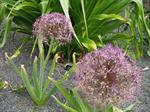
Allium species (Onion like plants)
Onion, garlic, chives and shallots are all Alliums. There are also many other, often very attractive plants in this group. They are mainly bulbs growing into a small clump of long round leaves and producing ball like flower heads on long stalks above the leaves. Many of the Alliums are grown as flowering herbaceous perennials or rockery plants. The scent can vary from one type to another, but it is generally strong and pungent like an onion or garlic.
Alliums prefer a well drained, loose soil and a warm, sunny position. It is important to keep the soil moist and fertile, so mulching and regular feeding is advisable.
Downy mildew (causing leaves to yellow) and aphis are perhaps the main problems. These can easily be controlled with appropriate sprays.
Angelica (Angelica archangelica)
A herb to 2.5m tall with large palm like sweet scented leaves. Prefers moist, well drained soil but will tolerate some dry periods. Angelica plants flower in the second year and then die.
Artemisia (Wormwood, Southernwood, Tarragon etc).
A large variety of scented foliage plants are grouped into the Artemisias. They are mostly very hardy plants (with a few exceptions), well suited to dry, sunny places. The leaves are usually tender and divided, not unlike a chrysanthemum leaf. The flowers are insignificant. Most artemisias are ideal as a hedge plant.
Commonly grown Artemisias include:
- A. absinthium (Common wormwood). Grows to 1.2m and has blue-green foliage
- A. arborescens (Tree Wormwood). Grows to 2m and has silver foliage
- A. dracunculus var inodora (Russian Tarragon). Grows to 1m, with slightly hairy foliage
- A. dracunculus var sativa (French Tarragon). Grow to 0.6m. The shiny green, dies down to roots in winter
- A. pontica (Roman Wormwood). Grows to 2m. The foliage is green on top and silver underneath, and finely divided
- A. vulgaris (Mugwort). Grows to 2m. The foliage is red green above and white underneath.
Calendula (Calendula officinalis)
This low, hardy annual flower is also known as pot marigold. Calendulas thrive in full sun and well drained soil. They may last for several years if cut back hard after flowering. The foliage has a subtle scent.
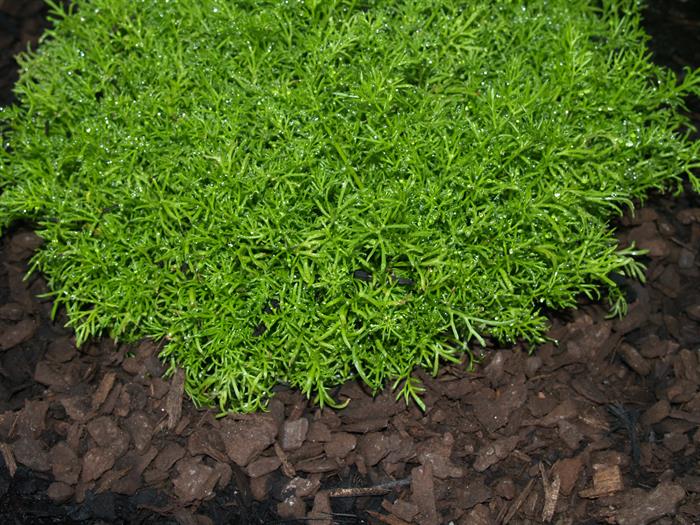
Chamomile (Anthemis nobilis)
There are several varieties of chamomile, all with scented foliage, though the most popular is the lawn chamomile (A. nobilis). Chamomiles are frost tender. They must have a very sunny position and well drained, fertile soil. They will tolerate some dryness once established, but the soil is best to remain moist for them to do well. All have attractive daisy type flowers.
Chrysanthemums
Chrysanthemums may have disease problems in areas that have wet summers. However, if you spray for fungus, avoid watering the foliage, feed well and ensure good drainage, it is quite possible to succeed in subtropical areas. Though the most commonly grown varieties only flower in the autumn (in temperate climates), some less common ones will flower for the rest of the year. Most chrysanthemums have strongly scented foliage.
Chrysanthemums prefer well drained, humus rich soil, prepared with rotted manure. Plant mid winter to mid summer on 8 10 inch grid. Don't grow the same plant more than one season (for most), as they are highly susceptible to a virus disease and will deteriorate. Take cuttings from flush of new season's growth early spring. This growth will be virus free. Mulch if the soil is well drained. When the plants are young, feed them well with nitrogen. As the plant gets established, it will require a more balanced fertiliser, particularly higher in potash. Control insects (aphis, thrip, and red spider) and fungal problems with regular spraying (whether organic or inorganic).
Citrus
Lemon, orange, cumquat and other citrus plants have scented foliage. Some (like limes) require a warmer, sub tropical climate, and others (like lemons) will tolerate very cold conditions. Generally they prefer a warm climate and well drained soil. Iron deficiency can be a serious problem, particularly on lime soils. A few rusty nails thrown at the base of a citrus will often make the foliage more lush.
Conifers
There are many hundreds of conifers, all with that characteristically strongly scented foliage. There are however some subtle differences in the scent from one to another. See the section on foliage affects for more on conifers.
Diosma (Coleonema pulchrum)
Diosma is a widely grown garden plant related to citrus and boronia. It's leaves have the same type of "tangy" scent. Diosma is generally hardier and more adaptable than citrus or boronia, though it does do best on a well drained soil and in full or filtered sunlight.
Lemon Verbena (Aloysia triphylla)
This deciduous shrub grows to around 3m tall and has clusters of white flowers over summer. The edible leaves have a strong lemon scent.
A native of tropical America, lemon verbena is frost tender and requires a moist but well drained soil. It forms a dense bush if in a sunny position but growth can become leggy and sparse if in too much shade.
Caryopteris clandonensis (Blue Spiraea)
Grows to 1m and has aromatic grey leaves and blue flowers
Choisya ternata (Mexican Orange)
Grows to 2m. Both the cream flowers and leaves are fragrant.
Cistus ladanifer (Rock Rose)
Grows to 1m. This is more cold sensitive than other non fragrant species.
Escallonia macrantha
Grows to 2m. Has aromatic shiny leaves. The flowers are red, pink or white.
Laurus nobilis (Bay laurel)
Grows to a height of over 6m. Susceptible to frost when young, leaves used fresh or dried in cooking
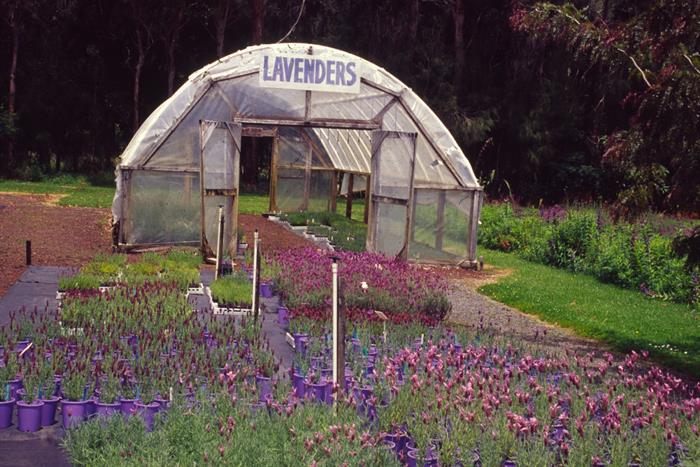
Lavendula spp. (Lavender)
Grows from 0.2 to over 1m in height. The strength and purity of the scent varies between different types. Varieties of L. officinalis are the best for scent.
Melissa officinalis (Lemon Balm)
Grows to 0.7m, and has a strong lemon scent in the leaves. In cool climates, this perennial dies back to the roots over winter
Mentha spp. (Mint)
There are over 25 species and hundreds of varieties, or varieties of mint. They vary greatly in height, leaf shape and scent. All prefer moist soil.
Myrtus communis (Common Myrtle)
Grow to 3m. Both the leaves and flowers are fragrant. Can be cold sensitive.
Melaleuca sp. (Honey Myrtle)
Most are bushes 2 4m tall, but some are smaller or much taller. Most have leaves with a scent similar to myrtle.
Origanum spp. (Marjoram or Oregano)
Grows to 0.4m. Although a perennial, this dies back to roots over winter.
Perovskia atriplicifolia (Russian Sage)
Grows to 1.2m. The foliage has a sage like scent. Has blue flowers on long spikes.
Populus balsamifera (Balm of Gilead)
Grows to 30m. Leaf buds have balm like scent. The buds have been used as a medicinal tea. (P. acuminata and P. trichocarpa are also scented.)
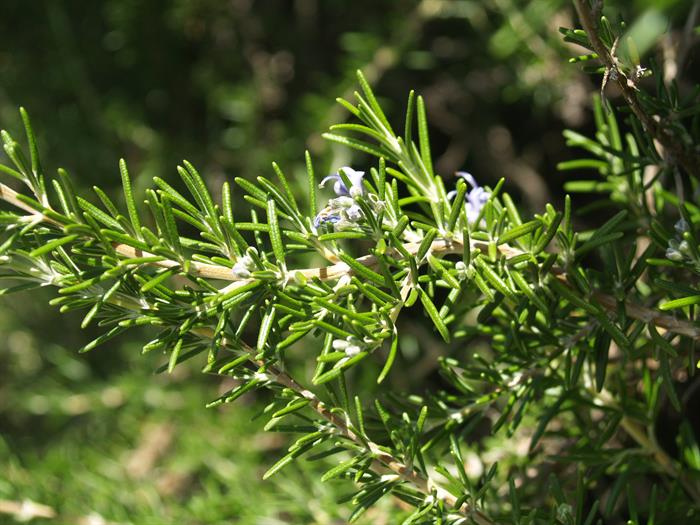
Rosmarinus officinalis (Rosemary)
Grows to 1m and has blue flowers. The scented foliage releases a wonderful aroma when brushed, and can also be used for flavour in cooking meats and vegetables.
Sages (Salvia spp.)
Grows from 0.8 1.5m. Different types have foliage scents from pineapple to traditional sage aroma.
Cotton Lavender (Santolina spp.)
Grows to 1m in height and has finely divided grey scented foliage yellow flowers. Often used as a hedge.
Skimmia japonica
Grows to 1m. Both male and female plants have fragrant foliage. The male plants also have fragrant flowers, whilst female plants bear red berries.
Tagetes sp. (Marigold)
Grow from 0.1 0.5m. This summer flowering annual has strongly scented leaves.
Tanacetum vulgare (Tansy)
Grows to 1m. Perennial dying down to roots over cold weather, strongly aromatic leaves.
Thymus (Thyme)
Grows to 0.3m. There are many different types, and all have that characteristic thyme scent.
LOTS MORE TO LEARN
Over 20% of plants in most gardens will be scented, at least during some period of the year. Given there are tens of thousands of different plants commonly cultivated; the range of scented plants you might grow is huge. For some plants, the scent will be heightened during warmer weather, or when foliage is softer and more tender during rapid growth (perhaps in spring). The intensity of scent is not only affected by time of year either. It can also vary greatly from plant to plant. Some plants produce a very subtle scent; but others can become quite overpowering.
More from ACS
Ebook - 117 pages of wonderful information, stunning pictures and great facts on lavenders.
View eBook
Ebook - Colourful informative book: covers all aspects of growing and using these lovely plants.
View eBook
Ebook -
Classification, care, propagation, containers, pruning, hedges, topiary
landscaping, commercial uses, conifer directory.
View eBook
Course - Start a lavender business: this course covers all the fundamentals needed.
View Course
Course - Extremely comprehensive, students graduating from this course alone can set up a herb farm. Covers all aspects in detail.
View Course
Course - learn how to include range of lovely scented plants in gardens. Create a scented garden.
View Course
Ebook - informative guide: care, use selection and lots of coloured pics.
View eBook