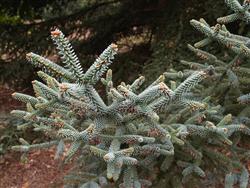
Cool Conifers
Conifers are cone-bearing plants, which grow to a definite shape, without needing to be excessively pruned
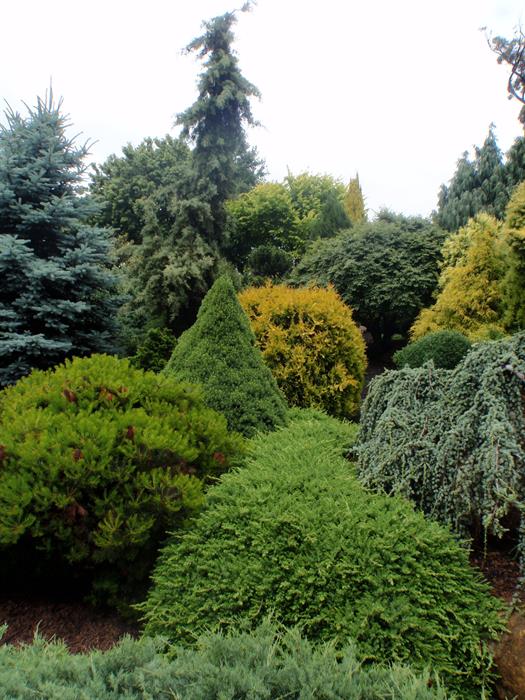
Conifers are usually associate with traditional European or North American gardens. These adaptable plants can provide a real contrast to many of the plants we commonly grow in Australia. They can provide us with a huge range of shapes, from tall, narrow trees, to conical shaped trees or shrubs, to prostrate, low growing types, to broad, domed shaped types and much more. They offer a huge range of colour variations, and a wide variety of foliage textures.
Whether you live in cool climates like Tasmania or Southern Victoria, or even warmer areas such as parts of Queensland, there are conifers that you can grow. For a long time conifers were considered unsuitable to Brisbane and more northern districts. Now, however, some types are being successfully grown in parts of Queensland - a trip to places like the Brisbane Botanical Gardens at Mt Coot-tha is a pleasant surprise to most conifer enthusiasts.
Traditionally conifers have been used for oils (skin care products), timber and even edible nuts. These days, however they are seen as offering many varied and exciting landscaping possibilities . Conifers can make excellent long living, screening plants, hedges or contrast plants. A huge range of dwarf, and low growing types are available, many of which make excellent ground covers or tub plants. Their ease of care makes them a favourite among designers and home gardeners.
Conifers do not require excessive care in terms of maintenance and pest control. Most simply require the following: do not over water, provide plenty of compost/mulch to maintain a cool root system, and trim lightly only, if at all, to maintain a neat appearance, unless you are using them for hedges, mazes, bonsai or topiary.
When grown in the cool parts of Australia, plants may be placed very close together. If planted in warmer districts, especially where humidity can be a problem, then plants should be spaced out to allow plenty of air movement between them, which helps in reducing plant diseases.
A small selection of recommended conifers include:
Aromatic foliage
- Abies amabilis, A. balsamea
- Cedrus spp.
- Chamaecyparis thyoides 'Andelyensis'
- Juniperus spp.
Conifers good for large containers
- Araucaria spp.
- Actinostrobus spp.
- Athrotaxus spp.
- Agathis spp.
Conifers for regularly trimmed hedges under 2m
- Chamaecyparis pisifera 'Plumosa'
- Picea abies
- Taxus baccata
- T. x media
- Conifers for hedges between 1m - 2m
- Chamaecyparis lawsoniana 'Ellwoodii', 'Fletcheri'
- C. obtusa 'Crippsii', 'Tetragona Aurea'
- C. thyoides 'Andelyensis', 'Ericoides'
- Juniperus communis 'Hibernica'
- J. squamata 'Meyeri'
- J. virginiana 'Burkii'
- Taxus baccata 'Fastigiata'
- T. cuspidata 'Densa'
- Thuja orientalis
Conifers for hedges between 2m - 4m
- Chamaecyparis lawsoniana 'Alumni'
- C. pisifera 'Plumosa', 'Squarrosa'
- Juniperus chinensis
- Picea abies
- Pinus mugo
- Taxus baccata
- T. X media 'Hicksii'
- Thuja occidentalis
- T. orientalis 'Shirls Supreme'
Conifers between 3m - 10m
- Actinostrobus pyramidalis
- Chamaecyparis lawsoniana 'Alumni', 'Monumentalis', 'Silver Queen',
- 'Triomf van Boskoop'
- C. pisifera 'Plumosa', 'Squarrosa'
- Larix decidua
- L. kaempferi
- Picea abies
- P. glauca
- P. omorika
- Pinus nigra
- P. strobus
- P. sylvestris
- Pseudotsuga menziesii
- Taxus baccata
- T. cuspidata
- Thuja occidentalis
- T. plicata
- Tsuga canadensis
- T. heterophylla
Conifers as groundcovers
- Juniperus communis 'Depressa', 'Hornbrookii', 'Repanda'
- J. conferta 'Blue Pacific'
- J. horizontalis 'Douglasii', 'Bar Harbor', 'Blue Forest', 'Plumosa'
- J. procumbens 'Nana'
- J. sabina 'Broadmore', 'Tamariscifolia'
- J. virginiana 'Reptans'
- Taxus baccata 'Repandens'
- T. X media 'Wardii'
Bird attracting conifers
- Juniperus spp.
- Larix spp.
- Picea spp.
- Taxus spp.
- Thuja spp.
- Tsuga spp.
Want to Know More?
Consider doing a course or buying a reference book from our school.
If you would like to communicate with one of our professional tutors, consider using our free career counselling service, to help you decide of a learning and career development direction that is tailored to your needs. click for details
More from ACS
Ebook - Inspiring: covers formal, natural, eclectic, modern, oriental, Mediterranean; zoom in on stunning images and plans.
View eBook
Ebook -
Classification, care, propagation, containers, pruning, hedges, topiary
landscaping, commercial uses, conifer directory.
View eBook
Ebook - Landscaping small areas, courtyard gardens, shade; plant selection planting, care: soils, pests, diseases, plant directory.
View eBook
Ebook - 197 colourful pages to change your perspective on using Australian native plants within your landscape and garden designs.
View eBook
Enhance your design skills and apply them to various garden styles.
View Course
Course - draw designs, survey sites, understand plants, soils, timbers, climate, and other landscape materials pivotal to the success of a good landscape design.
View Course