Choosing Flowers For St Valentines Day
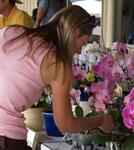 St Valentines day is the one day in the year when you’d better not get it wrong. Giving your partner a "death lily" is not going to achieve the same result as a bunch of 12 long-stemmed red roses.
So then, what do different flowers mean, and what flowers are going to remain healthy and be admired for a long time after they are given?
| WHAT DO DIFFERENT FLOWERS MEAN? |
| Bluebell |
constancy |
| Forget-me-not |
true love |
| Honeysuckle |
devoted affection |
| Jasmine |
amiability |
| Lily |
purity |
| Lily-of-the-valley |
return of happiness |
| Nasturtium |
patriotism |
| Poppy |
consolation |
| Rose |
pure love |
| Snowdrop |
hope |
| Violet |
modesty |
| Wallflower |
fidelity |
| Zinnia |
thoughts of absent friends |
WHICH FLOWERS LAST THE LONGEST?
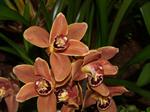
This depends not only on the variety, but also the stage at which they are picked, how old they are when you buy them and how they are cared for.
- Orchids will often last for quite a while (some Cymbidiums have been known to last up to a month or more).
- A potted plant (eg. African violet, Gloxinia), or a flowering rose in a pot will last longer than a cut flower. If you give something like this you might attach a romantic note like "I wanted to give you something that would go on forever, like our love" … then explain how to care for it. (Your plant supplier should be able to advise you.)
- Some tropical flowers like Globba gingers are known to last anywhere from one month to three months as a cut flower in water. Flower recipients are surprised to find roots have been produced in their vases after this period of time.
- Proteaceae related flowers like Banksia, Protea and Leucodendron can last a couple of weeks.
- ‘Green Goddess’ lily (Zantedeschia) and Oriental lily are known to last very well up to 14 days in water.
- Anthuriums with their plastic looking flowers are favoured by florists for their colour and lasting ability.
- Statice lasts very long in bouquets and can be used in dried floral displays after all the others have died.
What to look for
- Avoid flowers if the leaves are wilting or petals are dropping
- The plant tissue (stems, flowers & foliage) should be turgid (ie. firm). Avoid buying flowers that are starting to droop, or the foliage doesn’t have any resilience (spring) in it if you lightly squeeze it
- The base of stems should not be rotting or showing signs of discolouring
- Flowers that are completely open when you buy them will not last nearly as long as flowers just starting to open. Most buds should be starting to show colour, although a few closed buds are OK because this means you will have flowers for a longer period.
Tips On Buying
- Avoid buying flowers that have been left outside on display, especially if left in full sun. Check to see if they have more of the same plant inside in a more protected position.
- Buying early in the morning will usually get you fresher flowers, but make sure you keep them in a cool, protected position if you are holding on to them before giving them to your "special person".
- Make sure you give yourself enough time to buy the flowers you want, in case your local suppliers run out.
How to Care for Cut Flowers
If you can’t put the flowers in a vase straight away, put them in a bucket filled with deep, cool water. They can also be stored for a short time in a cool room, or the lower part of a domestic refrigerator. Before arranging the flowers in the vase, recut the stems to the required length on a slant, using a sharp knife or secateurs. Make sure the vase doesn’t receive direct hot sun and remember to change the water every few days (sooner with daisies because they may produce an unpleasant smell).
Various additives can be placed in the water to prolong the life of cut flowers. Some people use sugar or aspirins. Chemical preparations are also available, such as Chrysal. These are often supplied by your florist when you buy flowers from them, or you can usually obtain some from them for a small price.
You can also make your flowers last longer by treating the stems. Different methods are used for different plants, and are based on the type of stem - soft, hard, woody or hollow. Some examples are:Aster – Remove the lower leaves and make a slit in the ends of stems and place in deep water for one hour.
- Carnation – Stand stems in deep water and then dip flowers in water for a few minutes.
- Chrysanthemum – Crush the lower stems up to 8 cm then stand in deep water for 2 hours.
- Dahlia – Scald the ends of stems in hot water for 30 seconds then stand in deep water for 1-2 hours.
- Daisy – Scald the ends of stems.
- Lilies – Cut the stems at an angle and stand in deep water for one hour.
- Poppy – Scald the stems then stand in deep water for 30 minutes.
- Rose – Scrape the ends of stems for 2-3 cm and then split them.
- Wallflower – Split the ends of stems then crush lightly. Scald the ends with hot water for 30 seconds then stand in deep water for 30 minutes.
WHAT ABOUT FLOWERS FOR GUYS?
Traditionally flowers have been given by guys to their wives, girlfriends or partners.
In these enlightened (hopefully) times, it is more common now for girls to buy flowers for their guys.
The meaning of flowers given above tend to be more appropriate to women, whereas men see flowers more as aesthetics and an emotional connection between the giver and receiver without the various interpretations.
For most males, acceptable flowers to give them include:
- A carnation for the lapel.
- A plant for the garden (for a garden lover), with a note attached saying “something to grow along with our love”.
- Proteas, banksias, waratahs and other native flowers.
- A colourful indoor plant for their house or flat, or perhaps a plant in flower to remind them of you to go on an office desk.
- Anthuriums (naughty and suggestive!)
- Bold tropical flowers like heliconias and gingers
- Roses – yes men appreciate roses too!
Shocked at the prices people charge for flowers on Valentines Day? Why not study our
Cut Flower Production Course, where you will learn how to grow and sell beautiful flowers yourself.
Click here to view the course outline.
More from ACS
Ebook - Great colourful reference - professionals, home gardeners: all you need to know to grow bulbs for pleasure and profit.
View eBook
Course - covers all the fundamentals of knowing and growing perennials - for the professional or hobbyist.
View Course
Course - For the professional Flower Grower or those starting out - covers all the fundamentals plus many flower varieties.
View Course
Ebook - Types: flowers, vegetables, herbs; garden designs, seasonal displays; selection, care, problems, propagation.
View eBook