Beautiful Bulbs
You can grow bulbs anywhere, anytime, but you need the appropriate type for your locality. Though most common bulbs are grown in temperate climates, some only do their best in a tropical climate.
Why Lift Bulbs after Flowering?
For many bulbs, the foliage dies down after flowering, leaving only the dormant bulb in the soil. While in this dormant state, some bulbs are susceptible to rotting, attack by pests, etc. This can occur if the bulb is not particularly hardy in your climate, or if you apply irrigation water at times of the year when the bulb is used to experiencing dry conditions. For this reason many bulbs are lifted and stored in a clean, dry and dark place to protect them from deteriorating.
 Some bulbs however, do not benefit at all from lifting. It disturbs their root system and can even result in the death of the plant.
How Long do the Flowers Last?
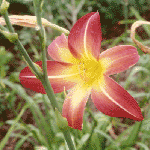
Some bulbs produce flowers continually over a period (eg. Day lilies can flower for many months, particularly in warm temperate to tropical areas). Others produce only one flower per bulb each year (eg. Daffodil, Tulip); and for an extended show, you need to plant a large number of bulbs.
Planting and Fertilising Bulbs
When you first plant out bulbs, you should provide them with a friable soil that has been fertilised with compost and/or an organic fertiliser. Bulbs will not grow well in heavy soils with low nutrients.
The best time to fertilise bulbs that become dormant is after they have flowered. It is during this time that they store the energy that they will use to produce flowers in the following year. It is for this reason that you should only remove the old leaves from bulbs when they are no longer green. If you have not removed the flowers to use in flower arrangements, it can also be beneficial to remove the spent flower heads, as this will prevent the plant from putting its energy into seed creation.
Want that Bulb Display to Last a Little Longer?
If you want your display of single flowering bulbs to last a little longer – plant half the bulbs upside down. That way it takes longer for the shoots to break the surface and consequently for the bulbs to flower.
Bulb Planting Depth
Always make sure that you plant bulbs to the recommended depth.
- If you plant them too deep their shoots may not reach the surface
- If you plant them too high they will topple over once they begin to grow
- Ensure that the soil is both friable and firm to allow root penetration and stability of the emerging plant
Bulbs for Different Localities
Bulbs usually like at least six months or so to establish themselves in the soil before they flower.
| Bulbs for Warm Temperate Conditions |
- Agapanthus
- Anemone
- Amaryllis
- Bluebell
- Calla
- Clivia
- Chionodoxa
- Crocus
- Daffodil
- Dutch Iris
- Freesia
- Grape Hyacinth
- Haemanthus
|
- Hippeastrum
- Ixium
- Jonquil
- Lachenalia
- Lillium
- Ranunculus
- Scilla
- Sparaxis
- Tritonia
- Triteleia
- Tuberose
- Vallota
|
| Bulbs for Temperate Conditions |
- Agapanthus
- Anemone
- Amaryllis
- Bluebell
- Calla
- Chionodoxa
- Crocus
- Daffodil
- Dutch Iris
- Freesia
- Grape Hyacinth
- Haemanthus
|
- Hippeastrum
- Ixia
- Jonquil
- Lachenalia
- Lilium
- Ranunculus
- Scilla
- Sparaxis
- Tritonia
- Triteleia
- Tuberose
- Vallota
|
HOW TO LEARN MORE
See our Newsletters (click) -and subscribe
See our Gardening, Landscaping and Horticulture Courses (click) -and browse
Use our FREE COURSE & CAREERS ADVISORY SERVICE (click) and apply
 VISIT THE ACS ONLINE E BOOKSTORE
More from ACS
Course - for the professional grower or hobbyist.
View Course
Course -Thousands have started with this and launched their careers in horticulture.
View Course