PORTABLEGARDENS
Moving House, or just reorganising? See how to take your Plants with you?
People move house frequently these days. Jobs change, finances improve,
and new opportunities emerge at lightnig pace, and as these things
occur; we move on.
Sometimes we don't move house; but an extension or reorganisation may threaten the loss of a treasured part of the garden.
With a little forethought, your garden can be relocated (at least partially) with a high level of success.
One obvious
solution is the use of containerised plants; the other is to transplant
or propagate new plants from those you stand to lose.
It can be heart beaking to loose any part of a garden;
Gardens in Containers
Pots and Tubs
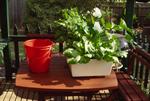
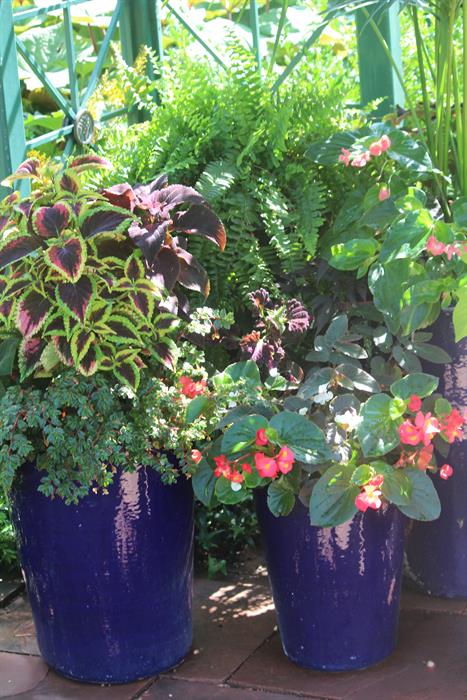
These are easily transported with little effect on the plants they contain, as long as they are not allowed to move around during transporting resulting in damage to the plants, and/or pots, or dislodging the growing medium.
It is important when in transit that they are not wind blown as this can effectively strip moisture from leaves and stems resulting in severe de-hydration and eventual plant death.
Large tubs, such as half-wine barrels, can be a great way to grow larger shrubs, or even smaller trees. It can also aid in keeping them compact. Plants suitable for barrels include citrus such as lemons, mandarins or cumquats, dwarf apple (e.g. Ballerina cultivars) and stone fruit varieties, some tropical fruit trees, etc.
Hanging baskets
Plants in hanging baskets can be readily transported, and are a great way to create the appearance of a more established garden at eye height, particularly until other plants have grown tall enough.
Hydroponic Gardens
Many small, portable, home hydroponic systems are now available. They can be easily disassembled for transport, or may be small enough for two or three people to lift and place in a trailer, or a moving van.
Plants can be readily transplanted
In general plants with long tap roots, or a few main roots, are more difficult to transplant than plants with more fibrous root systems. Many native trees, such as Eucalypts and Acacias, are difficult to transplant, while many deciduous trees can often be transplanted fairly readily, particularly when they are small. Many herbaceous plants also have small, fibrous root systems allowing them to be easily transplanted.
Avoid transplanting on hot or windy days. Plants are more likely to dry out in these conditions. Deciduous trees are best transplanted when they are dormant. They are less likely to suffer any set backs then. They are also easier to transport and handle without their leaves.
To achieve best success when transplanting, aim to remove the plant from the soil on the day of transplanting into the new site.
Plants that can be easily propagated
If you know at least a few months in advance that you are going to move then you can easily propagate new plants from many of your favourites in your existing garden. Grow things that you can take cuttings from easily and quickly, such as cacti, succulents, geraniums, and ivy, or that you can regrow easily from seed, such as sunflowers, or that you can divide easily (eg. bulbs and perennials).
If you have even longer to prepare then you might consider ground layering, or aerial layering some of your favourite trees or shrubs. Ground layering simply involves pegging down branches near the ground so that a section of the branch is in contact with the soil, or is placed in a shallow trench and covered with soil. An angled slit can be made into the branch with a sharp knife. This should go no deeper than a third of the way into the branch, and the length will vary according to the thickness of the stem. As a rough guide the length of the cut can be 1.5 to 2 times the diameter of the stem. Roots will eventually form at the site of the cut; the stem can then be severed from the main plant and placed in a pot to grow on as a new plant.
Plants suited to propagation by this method include azaleas, rhododendrons, camellias, trailing berries, ivy, mint, wisteria, clematis, viburnums and magnolias.
How To Aerial Layer
Aerial layering is similar to ground layering, however, the new plant is grown directly on the plant stem, rather than in the soil. A slit is made in the stem in the same way as ground layered plants, or a section of the bark is totally removed from around the stem (this is called called girdling). The injured part of the stem is covered with suitable media such as moist peat or sphagnum moss and held in place by plastic sheeting wrapped tightly around the media. Both ends of the plastic sheeting are then tied off at either end around the stem.
As for ground layering, roots will eventually grow from the wounded stem, and into the surrounding peat moss package. At this stage (possibly several months later) the branch can be severed below the new roots and potted on. This form of propagation works best in areas with high humidity on subtropical and tropical trees such as avocados and lychees, although it will work on plants such as holly, lilac and magnolia (it will take a lot longer, by which time you will have probably moved on!)
How To Minimize Damage To Your Plants
¨Get the plants healthy before a move.
¨Water plants well in the last couple of days leading up to transplanting.
¨Protect well from wind, and hot, sunny conditions…hire a covered trailer or truck, and/or transport the plants early in the morning, or during the evening when conditions are usually cooler.
¨Secure the plants well while they are in transit to reduce the likelihood of damage.
¨Tie covers/tarps, etc over foliage to reduce water loss, and “wind-stripping” of the foliage.
¨Spray with anti-transpirants. These are waxy substances that help reduce water loss from the foliage.
¨If you are travelling an extended distance or during hot weather then water the root balls of the plants during the trip.
¨Root balls carried in hessian, or similar covering materials can be surrounded with a packing material such as moist sawdust or mulch. This will help reduce water loss, as well as movement.
Preparing In Advance For Transplanting
Larger plants can be prepared well in advance for transplanting if you know well beforehand when you are moving. The more soil and roots that you move with the plant usually the better the plant will survive, and be quicker to re-establish. This has to be balanced against the weight (and size of the root ball), and how you are going to transport the plant. If you have access to plenty of help, or access to earth moving equipment, such as a bobcat or backhoe, then you can usually take a much larger root ball.
The plant can be prepared by trying to stimulate the growth of more fibrous roots. This can be done by digging a trench around the plant, out as far as the diameter of the root ball you intend to take when you transplant the plant. Dig down far enough to sever most of the outer roots. Any large damaged roots should ideally be trimmed neatly with clean, sharp hand tools. The trench can be back filled with the original soil, or with a coarse washed sand. The plant should then be regularly watered and fertilised to encourage good health. As you approach the time when you are going to transplant you should ease off on the watering and feeding to encourage the plant to “harden” up. When you are ready to transplant the trench can be re-opened, and dug deep and wide enough so you can dig under the root ball, allowing it to be more readily lifted.
For smaller plants you can achieve this by simply slicing a sharp spade down into the ground in a circle around the plant several months before you are going to lift them.
More from ACS
Ebook -
Classification, care, propagation, containers, pruning, hedges, topiary
landscaping, commercial uses, conifer directory.
View eBook
Ebook - colourful guide for students, home gardeners and orchid enthusiasts. Covers care and identification.
View eBook
Ebook - Identification and culture of palms and palm like plants
View eBook
Ebook - informative guide: care, use selection and lots of coloured pics.
View eBook
Ebook - Learn about these amazing plants, their identification and care with this informative text.
View eBook
Course - Popular design certificate that has launched many enthusiastic and talented design students into the industry.
View Course
Course - The opportunities for green walls and roofs will only increase as our cities continue to grow.
This is a solution to environmental and commercial problems on so many levels.
View Course
Course - Horticultural therapists use horticultural activities as a tool for helping disadvantaged people.
View Course
Course - Are you passionate about house plants or Interior Design? Start a career.
View Course
Course - improve your results and grow stunning flowers. Covers the major orchid genera e.g. Cymbidium, Dendrobium, Cattleya, Vanda and others.
View Course
Ebook - Types: flowers, vegetables, herbs; garden designs, seasonal displays; selection, care, problems, propagation.
View eBook