Kids In The Backyard
For most children the backyard is their most important playground, and a lot of what is learnt early in their childhood about life is learnt playing there.
Development of the child both mentally and physically starts at home. If the child is allowed to explore their surroundings and play in it, they will develop a better mental and creative mind than their house bound friend next door. The garden is very often the first educational system a child comes into contact with.
Building cubbies, digging holes, climbing trees, and ball games are all great ways of playing; but at the same time, they are activities which are best tempered with commonsense if permanent damage to the backyard is to be avoided. Never discourage children from playing with their environment, but try and teach them to understand what damage they might do.
What Kids Find In The Backyard
There are five different things kids commonly find in the backyard that can be used to create play:
Animals - everything from worms, ants, snails and spiders to birds, lizards, dogs and cats.
- Plants - including mosses, fungi and ferns, shrubs and trees. Play can be centred around complete living plants (e.g. growing a garden, climbing trees, building a tree house) or parts of plants (e.g. arranging flowers or making a whistle from a piece of bamboo).
- Earth - stones, rocks, sand and soil are all commonly used in play.
- Water – including pools, ponds, hoses, or just buckets full of water.
- Man made objects - Toys and playground equipment are the most obvious man made play objects, however such things as buildings, walls, paved areas, and fences have tremendous play potential, and don't cost any extra. Brick walls, for example, can become rebound walls, while fences and walls can be used for murals, or as part of a lean to cubby.
Too often, however, instead of exploiting the play potential of these things, we discourage or even ban play around them. While safety is paramount (e.g. avoiding spider bites, the potential for drowning in water features) it is very important that children be given as many opportunities as possible to play in different ways.
LANDSCAPING FOR PLAY
A play space is made up of surfaces, play structures (equipment), plants, earth shapes, fences, walls, seats, steps and other landscape features.
The components of a play space might include:
| CATEGORY |
EXAMPLES |
| CONTOURING |
Mounds, slopes, embankments, steps, cliffs |
| SURFACINGS |
Grass, earth, sand, gravel, mulch, rubber |
| ENCLOSURES |
Fences, walls, cubbies, tree houses, other buildings |
| WATER |
Ponds, fountains, streams, drinking fountains, hoses, sprinklers |
| LANDSCAPE FEATURES |
Statuary, bridges, pergolas, arbors, gazebos |
| FURNISHINGS |
Seats, tables, rubbish bins, BBQ’s, lighting |
| PLANTS |
Hedges, mazes, topiary, trees, windbreaks |
| PLAY STRUCTURES |
Slides, swings, see saws, climbing frames |
| OTHER PLAY FACILITIES |
Games courts, rebound wall, bike trail, skate areas, basket ball rings, animal enclosure, etc. |
When catering for kids you have the job of selecting and combining these components to create an appropriate environment which will enhance play.
Some Things To Consider
What are the children's ages?
Toddlers enjoy exploring and learning about their physical surroundings. It is important to include variety in textures, smells and surfacing. Older children interact more with each other, so the backyard needs to be designed to allow them to play with each other rather than with things. It is also very important to cater for the changing needs of children as they grow – they tend to do that very quickly at times!
How much will the yard be used?
Things which can only be used by one child may create conflict. Crowding makes accidents more likely, so design safety becomes more critical. Leave room around playground equipment, and make sandpits big enough for all the kids. Heavily used play areas need stronger construction and more frequent maintenance.
How much time will be spent in the yard?
A child's attention span is short. Some play activities are only suited to playgrounds which are to be used only occasionally or for short periods of time. Don't expect a child to use the same swing all day every day, but they might use a sand pit more often.
What Other Uses Will The Area Be Used For?
Kids play needs will commonly need to be balanced against other requirements for the same area, such as outdoor entertainment, for pets, for parents relaxation. Try to maintain flexibility in your use of the area – perhaps play equipment could be moveable, perhaps fixed structures such as sandpits could have covers made so that they could be used at other times for seating and/or as a low table. Compromises, however, may need to be made.
How Visible Are the Play Areas From Your House?
Children's play is most creative when the child feels they are alone and out of sight of parents. However, common sense says that a young child should always be kept in view for safety reasons. How you wish to meet these two contradicting designing values is up to you. Good creative designing on your part will find an answer.
PLANTS
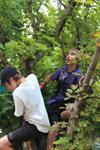
Plants have too often been underused or misused in playgrounds. Above all, avoid using poisonous plants in areas where small children play. It has been said that more than one third of commonly grown plants have some toxic properties. Children below the age of 5 or 6 frequently place parts of plants in their mouth.
On the positive side, plants can provide many possibilities for a child's play:
- They can become play structures (providing mazes, cubbies, climbing structures, hidey holes, etc).
- They can modify the environment (providing shelter from sun, wind, rain)
- They can define spaces (providing enclosure, protection, separating different parts of the play space).
- They can provide materials (flowers, seeds, bark, leaves, twigs) for craft or games.
Trees should be selected according to both the strength of their timber (the ability to withstand use by children), and disease resistance. A birch, for example, which is highly susceptible to internal rots can become unsafe for climbing. Prickly or poisonous plants, or plants that are prone to drop branches are also unsuitable. The following trees are better than most to hang a swing from or climb in:
- Quercus (The Oaks)
- Eucalyptus camaldulensis
- Fraxinus (The Ashes)
- Platanus (Plane Tree)
- Pinus (Pines) – the main problem can be sap running from tree wounds.
- Prunus – several types are excellent small climbing trees for small children.
- Crepe Myrtle (Lagerstroemia indica) also good for small children.
SURFACING
Playground equipment must have soft surfaces under them. The most lethal surface under any play structure is concrete or asphalt. Hard surfaces are useful in open areas for playing ball games, but should never be used under equipment, or other areas where children are likely to fall from any height. Common softer surfacing used include wood shavings, specialised playground wood "nuggets", and rubber matting.
SOME IMPORTANT CHILDREN'S PLAY EQUIPMENT
Sand pits:
Ensure that it is sturdy, does not hold water, has a cover to displace rainfall and prevent animals contaminating sand, or leaves or other debris blowing in, and has protection from the hot sun. Consider when building the pit to put a layer of rounded (smooth) gravel deep beneath the sand to discourage children from digging into the soil and mixing earth with the sand.
Swing Sets and Climbing Units:
These play equipment pieces are mostly made of timber, metal or plastic (PVC) with the occasional piece of rope or chain. Ensure all edges are rounded and smooth, pieces do not come off, it is relatively child safe (nothing is actually 100% child safe), it is visible from your house and it is ideally positioned near shade.
Cubbies
Cubby Houses are very important in a child's life. They give children a place of their own, where they can do things which can't be done anywhere else (even in their bedroom). No one is likely to insist its kept tidy or tell them not to do this or that. They can make their own rules and play their own games. They don't have to be a makeshift eyesore in the garden, but be sure to remember it's the children's building, and they must be the interior decorators. If the parents build, buy or arrange everything inside the cubby it will stop being the kid's cubby and become the parent's cubby. Safety is also an important factor. A well constructed, well finished cubby will not only look good but will reduce the likelihood of injuries that so often occur in poorly constructed cubbies. Look for timber, rather than steel structures; make sure windows are of perspex or plastic for safety; and include a sturdy floor. The floor is important, also from a safety viewpoint, as it prevents the construction of "secret escape tunnels" which can be very dangerous.
Want to Know More?
Consider doing a course or buying a reference book from our school.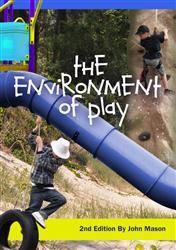
The Environment of Play cd-rom/ebook by John Mason is available through our bookshop. This offers a classic guide on how to develop play environments for children.
Click here to purchase this or similar products.
If you would like to communicate with one of our professional tutors, consider using our free course counselling service. click for details
To browse our courses, go to http://www.acsgarden.com/Courses/Default.aspx
More from ACS
Learn to bring together children's play needs and garden design.
View Course
Ebook - Relationships between PLAY and the ENVIRONMENT and how to best utilise this in designing a play area.
View eBook
Learn to work with wood; around the home, or at work.
View Course