Coloured Garden
Gardens have the potential to be the most colourful part of anyone's property. Everything for the garden is available in a vast array of colours. But how do you decide which colour to choose?
Colours Create Atmosphere

Different colours are considered to provoke different moods. Cool colours are associated with calmness. Hot colours are seen as representing activity. If you painted the inside of your gazebo blue, and then sat inside it to look over your garden, you would probably find it easy to relax (unless your garden itself was full of vibrant colours).
However, if you painted the inside orange or red you would probably find it harder to relax. Although oranges, reds and yellows occur naturally in flowers they are coloured in this way to attract bees, butterflies, birds and other pollinators. Paler colours are not seen by bees and are less stimulating to the eyes.
Certain Colours fit certain garden styles
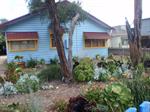
Many colours are suited to a particular style of garden, and have often originated due to the availability of landscaping materials within the country of origin.
- Mediterranean
Here, terracotta is prominent in tiles, pots, statuary and pavers. - Spanish and Mexican
Whitewashed walls are a distinguishing feature. They are often masked with climbers and topiary or espaliered trees to reduce glare from the sun. - Greek
White and blue ceramics in the form of mosaics, floor tiles and garden ornaments are typical in these gardens. - Japanese
Red bridges and buildings are a common feature in Japanese gardens. - Victorian and Edwardian
Strong mid-green paint (British racing green) is characteristic of containers, furniture, garden structures and trellis in these gardens. Many garden fixtures were intended to blend in to the background permitting specimen plants, sculptures, statuary and ornaments to be more discernible. - Cottage
The cottage garden has typically had a variety of colour on display. This is normally attained through mixed border planting.
Colour Combinations
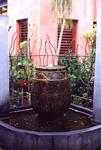
With the exception of those people who are colour blind, most of us would agree that certain colour combinations clash. A colour clash must be avoided at all costs. On the other hand contrast works well with colours. White stone against dark red or green foliage, and deep red flowers against pale green foliage works very well.
Alternatively you can achieve a sense of harmony by using colours that are similar. Imagine grey stone pavers, silvery foliage, stone pots and walls and a grey slate roof. Add to this, pale blue or white flowers, and you have a scene that is very harmonious.
Simplicity can have the greatest impact
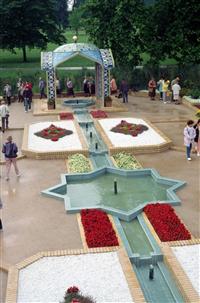
If you wish to create a certain mood choose a predominant colour to base your garden around. For example, a white garden where flowers are white, and foliage is silver or paler shades of green. You can follow the same idea with a bold colour, for example, a red garden where flowers and foliage are in shades of red, purple and bronze. Mud bricks, red bricks, terracotta tiles and pots would complement this theme. Try looking at different coloured objects and flowers to see how they affect your mood before you decide on your theme.
Plant for Colour
Plants are not the same colour all year round. Most noticeably, deciduous plants change colour in autumn. However, many evergreen plants can change colour too, and so look different in different seasons. Also, plants change colour when they produce flowers. Sometimes foliage may fade slightly as energy is channelled into the flowers. In addition, flushes of new growth can be a different colour on many plants. Many Lily Pillies and Pieris 'Flame of the Forest' produce new foliage which is tinged with reddish bronze. As the leaves mature they become green. The tender young leaves on Aucuba japonica (Spotted Laurel) are notably creamy white before turning dark green with creamy yellow blotches.
Plan your Plants
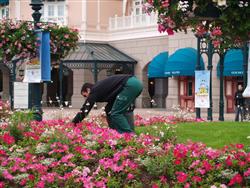
Think about how your choice of plants will look together at different times of the year. You can plan to use different colours to achieve a different ambience with the seasons. For example, you may opt to have a garden bed look bright and vibrant to welcome in the spring after a long and dreary winter. The same garden bed could then be superseded by flowers in more mellow colours as the garden heads into summer, making it seem more peaceful to sit in. For example, yellow Daffodils, red Camellias and brightly coloured Primula 'Polyanthus' in the spring could give way to more subdued blue shades of Lavender, Rosemary, Wisteria and Liriopes later in the season. So, colour up your garden for the ultimate atmosphere all year round.
Want to Know More?
Consider doing a course or buying a reference book from our school.
If you would like to communicate with one of our professional tutors, consider using our free course counselling service. click for details
If you want to browse our bookshop, go to www.acsbookshop.com
 VISIT OUR ACS ONLINE E BOOKSTORE
- Quality ebooks written by our staff
- Wide range of Horticulture titles by John Mason, author of over 40 gardening books, garden magazine editor, nurseryman, landscaper and principal of ACS.
- Ebooks can be purchased online and downloaded straight away.
- Read on an ipad, computer, iphone, reader or similar device.
- New titles published every month –bookmark and revisit this site regularly
- Download sample pages for free, to see what each book is like.
- Click here